
Young minds love to explore the world around them; they are filled with curiosity and want to learn more and more about their surroundings. However, it is difficult to help each child uncover the truths of nature through experience. One of the best ways to go about it is through reading nature books.
A great nature book does more than tell children that a bird is a bluebird or that an otter lives near freshwater. It makes them want to look for one. The most useful Nature Books For Kids turn reading into a starting point for observation, questions, conversations, and outdoor adventures.
When choosing the books on this list, we looked for more than attractive covers. The selections offer engaging storytelling, accessible nature learning, memorable wildlife, illustrations that encourage observation, and opportunities for parents and children to talk about what they see. Several also make it easy to connect a story with a real-world activity, whether that means visiting a pond, watching birds, exploring a garden, or simply looking more closely at the trees outside.

Here are seven excellent choices for young nature lovers.
- The Wise Old Fish by Amy Collins:
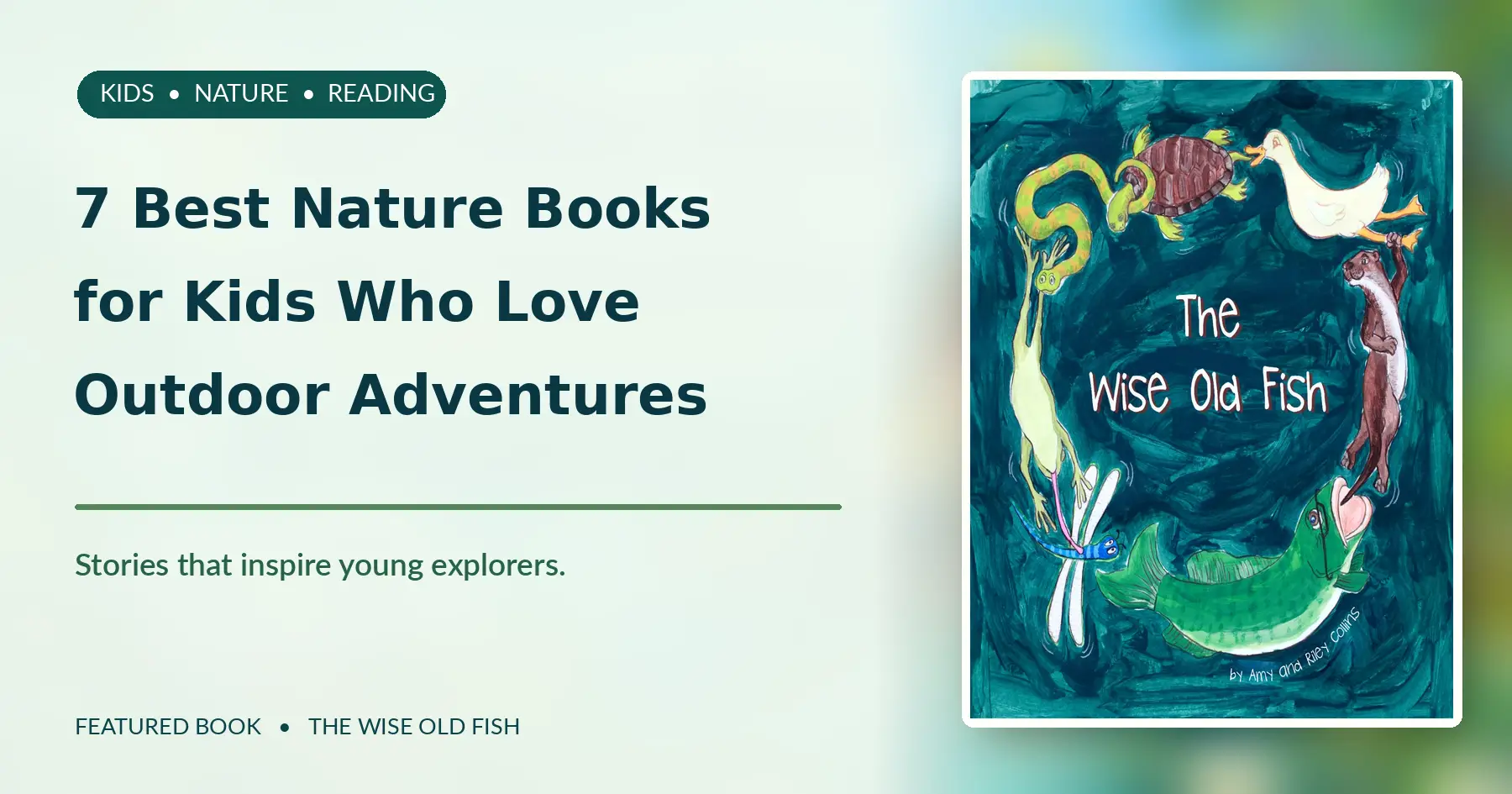
When compiling some of the best Children’s nature books, The Wise Old Fish stands out because it combines a funny story with genuine opportunities for nature learning. The book has been beautifully written by Amy Collins, and Riley Collins has done the illustrations.
The book follows an absent-minded old fish that accidentally swallows a dragonfly and gets caught in a chain of increasingly silly encounters. Childhood experiences around a small lake inspired the story.
Its appeal goes beyond the humorous adventure. The book introduces children to freshwater wildlife and habitats while combining illustrations with real-life wildlife photography. The accompanying nature information gives young readers opportunities to identify animals and learn about their roles in an ecosystem. It has been designed in a manner that gives a fresh perspective on wildlife to young children.
The manuscript includes wildlife such as largemouth bass, bluegill, great blue herons, mallard ducks, bats, bald eagles, otters, beavers, ospreys, owls, deer, squirrels, and many others. It also introduces the Pinelands and explains why habitats and conservation matter.
- The Children’s Book of Wildlife Watching by Dan Rouse:
For all those kids who love to explore Mother Nature and have an inclination toward wildlife, this is one of the books that is hard to miss. Written by Dan Rouse and illustrated by Abby Cook, this book is aimed at children ages 5–9 and combines wildlife information with tips, activities, crafts, and ideas for helping local wildlife. Barnes & Noble categorises it within children’s nature, animals, and environmental conservation.
This is one of the strongest Wildlife books for children on the list because it gives young readers something to do with what they learn. Parents can use it before a walk, birdwatching trip, or backyard observation session.
Instead of treating nature as something that exists only inside a book, it encourages children to become active observers of the world around them.
- The Hike by Alison Farrell
The Hike turns an ordinary walk through the woods into an adventure filled with observation and discovery. Three young explorers head into nature and learn by looking closely at the world around them.
The book is described as an outdoors-themed picture book for preschool and kindergarten children and highlights its emphasis on observing, admiring, and learning in the woods.
That makes it a natural choice among Outdoor books for children. It can also encourage parents to make their next family walk more interactive. Ask children to look for different leaves, listen for birds, search for animal tracks, or notice changes in the landscape.
The book’s greatest strength is that it shows children that nature exploration does not have to be complicated. Curiosity is enough to begin.
- The Ocean at Night by Isabelle Simler:
The Ocean at Night offers a newer choice for children fascinated by ocean animals. Isabelle Simler combines poetic language, striking illustrations, and facts about marine life to introduce young readers to the mysterious world beneath the waves after dark.
Barnes & Noble lists it for children ages 4–8 and describes it as an immersive exploration of nocturnal ocean life. Readers encounter animals including turtles, seabirds, dolphins, whales, swordfish, rays, and octopuses.
It is an excellent example of Nature picture books using art to encourage careful observation. Children can study the illustrations, compare different animals, and discuss what makes nighttime habitats different from those they see during the day.
For families who cannot visit the ocean, the book provides a fascinating way to explore marine ecosystems from home.
- We Are Water Protectors by Carole Lindstrom:
Nature has many aspects to it; one among them is understanding the wildlife and why their habitats need protection.
We Are Water Protectors by Carole Lindstrom, illustrated by Michaela Goade, introduces children to the importance of protecting Earth’s water. The book is a New York Times bestseller and Caldecott Medal winner, and Barnes & Noble describes it as a lyrical call to safeguard natural resources.
For parents, this book provides an opportunity to discuss rivers, lakes, drinking water, pollution, and the connections between people and wildlife.
It is especially useful for children who are ready to move from simply asking, “What animal is that?” to asking, “How can we help protect it?”
- Outside In by Deborah Underwood:
The book brings about a change in perspective about nature books for kids. Children do not need to travel to a rainforest or national park to experience nature. Outside In by Deborah Underwood, illustrated by Cindy Derby, encourages readers to notice the ways the natural world touches everyday life, even when they are indoors.
The book was named a 2020 Caldecott Honor Book, and Barnes & Noble describes it as a thoughtful exploration of the ways nature affects our lives in homes, apartments, and cars.
This makes it a particularly useful choice among Picture Books For Kids who may live in cities or spend much of their time indoors.
7. The Great Kapok Tree by Lynne Cherry
The Great Kapok Tree takes young readers deep into the Amazon rainforest. Lynne Cherry’s story follows a man who becomes exhausted while trying to cut down a giant kapok tree. While he sleeps, the rainforest’s animals and other inhabitants make their case for why the tree should be saved.
Barnes & Noble describes the book as a beautifully illustrated environmental fable in which the rainforest’s residents demonstrate how living things depend on one another.
It is one of the most memorable Books About Wildlife because animals are not simply included as interesting characters. They help children understand the importance of habitats and interconnected ecosystems.
Parents can extend the story by asking what might happen if one important tree disappeared and whether children can find examples of trees providing homes or food for wildlife near them.
Conclusion The strongest Nature Books For Kids therefore do more than fill a bookshelf. They encourage children to step outside, slow down, observe, and become curious about the living world around them. Whether your child loves animals, hiking, water, forests, or simply asking endless questions about what they see, the right book can be the first step toward a lifelong interest in nature